

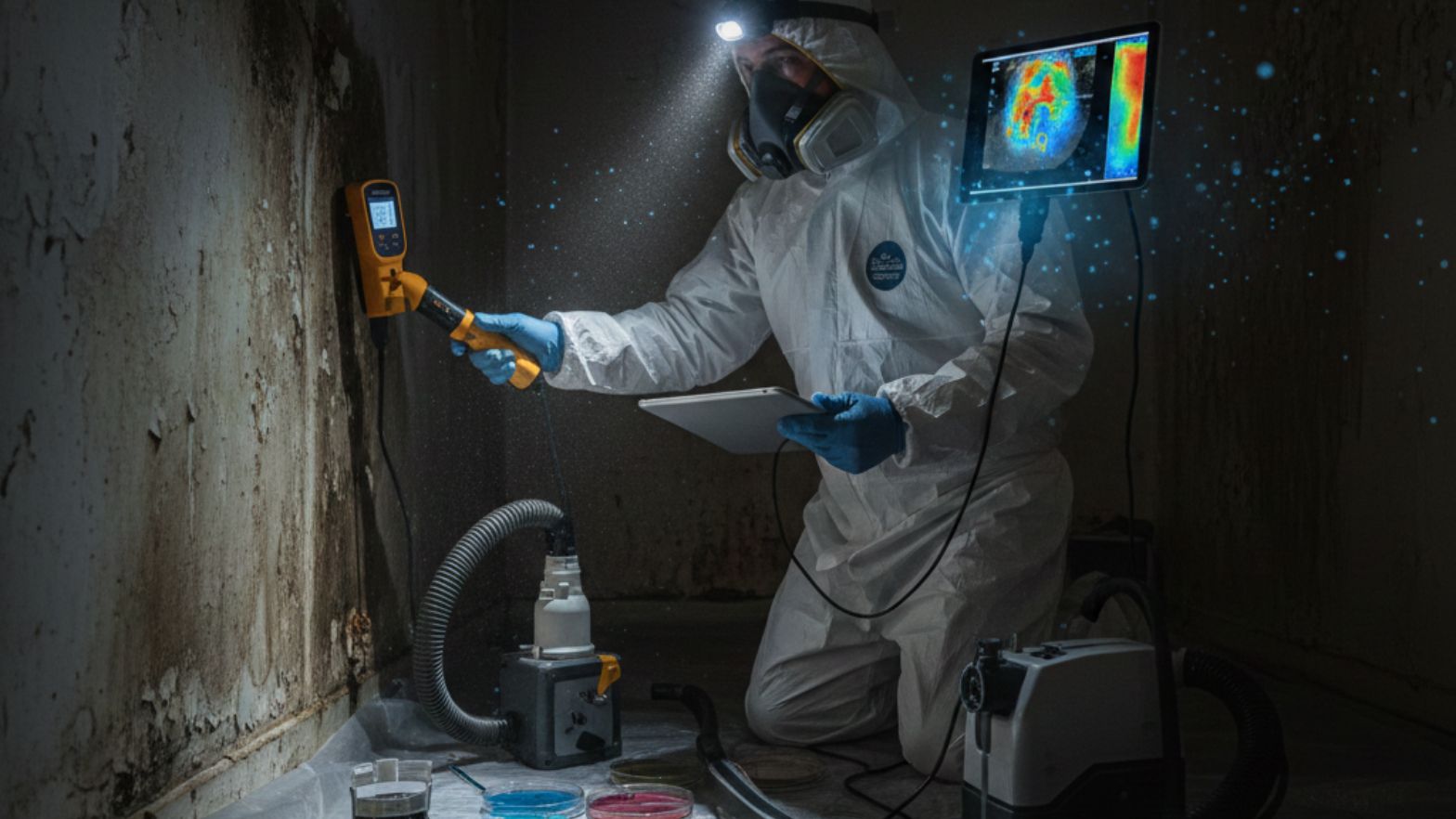
Mold has a way of staying hidden while quietly affecting indoor air quality and structural materials. By the time visible growth appears, the problem has often been present for weeks or months. This is why professional mold testing plays such a critical role in protecting homes and commercial spaces. Modern mold experts rely on advanced testing methods that go far beyond a simple visual check. These techniques provide accurate data, clear answers, and a reliable path forward. This post explores the advanced mold testing methods used by experienced professionals and explains why each approach matters.
Why Does Advanced Mold Testing Matter?
Mold spores exist naturally in the environment, but elevated indoor levels point to moisture problems, ventilation issues, or hidden leaks. Guesswork has no place in mold assessment. Advanced testing allows experts to identify mold presence, determine the type, measure concentration levels, and locate the source. The goal is not alarm but clarity. Accurate testing helps avoid unnecessary remediation while ensuring real issues are handled correctly. It also protects occupants from prolonged exposure and prevents repeat problems.
Air Sampling Analysis
Air sampling remains one of the most widely used advanced mold testing methods. It measures the concentration of airborne mold spores inside a building and compares them to outdoor levels. Specialized air pumps draw a precise volume of air through collection cassettes. These samples are then sent to accredited laboratories where trained analysts identify spore types and counts under a microscope.
This method helps experts understand whether indoor air quality has been compromised. It is particularly useful when mold is suspected but not visible. Elevated indoor spore counts often signal hidden growth behind walls, above ceilings, or within HVAC systems.
Surface Sampling Techniques
Surface sampling focuses on mold growth already present on materials. Professionals collect samples using swabs, tape lifts, or bulk material sections.
Tape lift samples capture surface growth patterns and are ideal for identifying mold species. Swab samples allow for deeper collection from both porous and non-porous materials. Bulk samples involve removing a small section of affected material for lab analysis. These methods help confirm the type of mold present and guide remediation strategies. Some materials may be cleaned safely, while others require removal. Accurate identification supports informed decisions.
Cavity and Wall Void Testing
Hidden mold often grows inside wall cavities, ceiling voids, and enclosed spaces where moisture lingers undetected. Cavity testing addresses these concealed areas.
Experts use small access points to insert tubing connected to air sampling pumps. This technique draws air directly from inside walls or other closed spaces. Results reveal whether mold growth is active behind surfaces that appear clean. Cavity testing reduces unnecessary demolition while ensuring concealed problems are not overlooked. It is especially valuable after water damage or plumbing leaks.
Moisture Mapping and Infrared Imaging
Moisture is the key driver of mold growth. Advanced mold testing includes tools designed to locate moisture before mold becomes visible. Moisture meters measure water content in building materials such as drywall, wood, and concrete. Infrared thermal cameras detect temperature variations that often indicate hidden moisture.
Thermal imaging does not detect mold itself, but it highlights conditions where mold thrives. These tools help experts trace leaks, condensation issues, or insulation gaps that contribute to ongoing moisture problems.
ERMI Testing for Detailed Assessment
Environmental Relative Moldiness Index testing, commonly known as ERMI, provides a deeper level of analysis. This method uses dust samples collected from indoor surfaces and analyzes them using DNA based technology.
Laboratories measure the presence of specific mold species and generate a numerical score that reflects overall mold burden. ERMI testing is often used in complex cases, real estate transactions, or post-remediation verification. While not required in every situation, ERMI testing offers detailed insights that traditional methods may not capture.
HVAC System Mold Testing
Heating and cooling systems can distribute mold spores throughout a building. Advanced testing often includes HVAC inspections and sampling.
Experts collect samples from vents, drip pans, coils, and filters. Air sampling near supply and return vents also helps assess system impact on indoor air quality. Testing HVAC components ensures that remediation addresses the entire environment rather than isolated areas. It also helps prevent recontamination after cleanup.
Post Remediation Verification Testing
Testing does not end when remediation is complete. Post-remediation verification confirms that mold levels have returned to normal and that cleanup was successful. This process typically includes air sampling and visual inspections. Results provide documented proof that indoor conditions are safe for re-occupancy. Verification testing protects property owners, tenants, and contractors by offering clear evidence of resolution.
Laboratory Analysis and Expert Interpretation
Advanced mold testing relies heavily on laboratory analysis, but results alone do not tell the full story. Experienced mold experts interpret findings within the context of building conditions, occupancy patterns, and moisture history.
Not all mold presence requires remediation. Professionals distinguish between background spore levels and meaningful contamination. This balanced approach prevents unnecessary expense while prioritizing health and safety.
The Value of Professional Expertise
Advanced tools and testing methods require proper training and experience. Incorrect sampling or misinterpretation can lead to false conclusions. Certified mold professionals follow strict protocols and work with accredited laboratories to ensure reliable results. Their expertise transforms raw data into actionable solutions.
Summing Up
Advanced mold testing methods provide clarity where uncertainty often exists. Through air sampling, surface analysis, moisture detection, cavity testing, and laboratory evaluation, mold experts uncover hidden issues and guide effective responses. These methods protect buildings, safeguard health, and support long-term indoor air quality.
If you suspect mold or want professional insight into your indoor environment, working with experienced specialists makes all the difference. For thorough mold testing, clear answers, and professional guidance you can trust, contact Long Island Mold Specialist today. Our experienced team uses advanced testing methods to help protect your home or business and restore confidence in your indoor space.