
Mold growth in homes and offices is not only unsightly but also bad for your health. It can cause allergies, breathing problems, and even long-term illnesses in some cases. The first thing to do when mold shows up is to find out how bad it is. This is when it is important to test for mold.
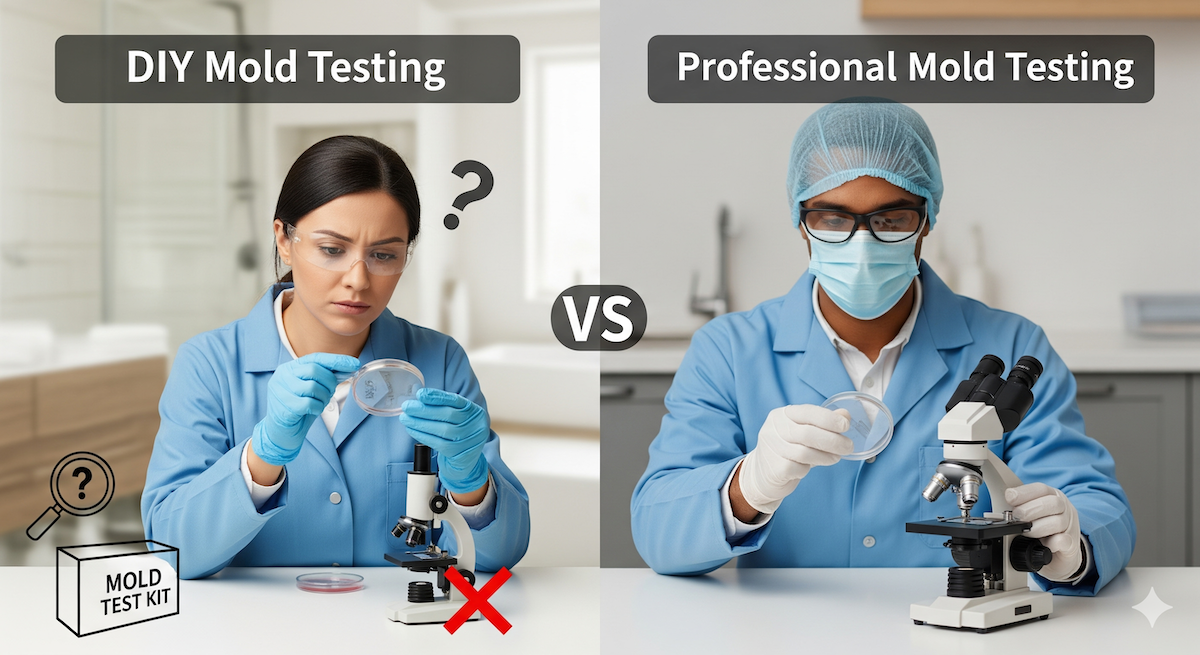
A lot of people debate over whether they should use a DIY kit to test for mold or hire a professional mold inspector. Both choices have their pros and cons, but safety, accuracy, and peace of mind are often the most important factors.
Why Is It Important to Test for Mold?
You can’t always see mold. It often hides behind walls, under floors, or in the air conditioning and heating systems. Inhaling mold spores can make asthma worse, cause a long-lasting cough, and give you sinus infections. Mold testing can tell you what kind of mold is there, how much of it there is, and if the area is safe. Homeowners might not realize how bad the problem is and put off fixing it if they don’t test it properly.
The Appeal of DIY Mold Testing
You can easily find DIY mold test kits at hardware stores and online. They say they can get results quickly and cheaply. A lot of homeowners choose them because they seem easy to use. You usually clean a surface, put it in a container, and wait for the lab results.
Pros of DIY Mold Testing
- Affordable upfront cost: The upfront cost is lower than hiring a pro.
- Simple process: It is easy to do and doesn’t need an appointment.
- Good for visible mold: This method is good if you just want to quickly check that the substance is mold.
Cons of DIY Mold Testing
Results from DIY kits can often be misleading. There are mold spores in the air, even outside. A DIY test might show that the mold is there, but it won’t tell you if it’s harmful or if it’s making the air quality worse. Other problems are:
- Not very accurate: Most DIY kits don’t measure mold in the air, which is the biggest health risk.
- No professional translation: Results may show that mold is growing, but they may not say if it is dangerous or common.
- Limited scope: A swab test only looks at the surface, not the places where mold often spreads.
Because of these gaps, homeowners might think the problem is small when it could be much bigger.
Why Should You Hire a Professional to Test for Mold?
Professional mold inspectors use high-tech tools and follow the rules of the trade. They take samples of the air and surfaces, check the humidity levels, and use thermal imaging to find moisture that is hidden. The process gives a much clearer picture of the mold issue.
Pros of Professional Mold Testing
- Accuracy: Professionals can tell you what kind of mold it is and how much of it there is.
- Health and safety: They check for mold spores in the air, which is very important for families with asthma or allergies.
- Thorough inspection: Inspectors look for mold sources that are hidden behind walls, under floors, and in ducts.
- Reports that you can act on: You get a full report that tells you how to safely remove and fix the problem.
Professional testing costs more, but the benefit is having accurate information and a safe place to live.
Safety Issues: DIY vs. Hiring a Pro
It may seem safe to handle mold samples on your own, but disturbing mold colonies can release spores into the air. If you don’t wear the right protective gear, you could breathe them in. Professionals know how to safely collect samples and keep them from getting mixed up with other samples.
If you think you have toxic black mold, testing it yourself is even more dangerous. Some types of fungi, like Stachybotrys chartarum, can make mycotoxins that are bad for you. A professional knows how to deal with these kinds of situations without putting people in danger.
Which Is Better: Accuracy or Reliability?
Professional testing is the clear winner when it comes to accuracy. A DIY kit might show that mold is there, but it can’t tell you how bad it is or how much there is. Not only do professionals identify different types of mold, but they also check to see if the levels are too high.
For instance, a professional might find that mold spores are mostly in certain rooms or are spreading through the HVAC system. That information makes it possible to fix things in a specific way. A DIY kit can’t give you that much information.
Long-Term Costs: Are You Saving Money or Spending More?
At first glance, testing things yourself saves money. But if you don’t understand the results correctly, you could end up spending more money later. Mold keeps spreading if it isn’t found behind walls or in ducts. The cost of getting rid of the infestation goes up a lot when it gets bad.
Professional testing helps find the problem early and stops treatments that aren’t needed. It makes sure that money spent on fixing things goes toward actually fixing the problem instead of just guessing at what will work.
When Might DIY Testing Be Enough?
A DIY mold test could be helpful in some situations. If you see a small, isolated patch of mold on a bathroom wall, a kit can help you make sure it’s mold before you clean it with the right products. You can feel better about small problems with a DIY test.
But if you have symptoms like a persistent cough, headaches, or allergic reactions, or if you think there might be hidden mold, it’s not safe to rely only on a DIY kit. Next, you should have a professional inspection done.
In Conclusion
You shouldn’t ignore mold testing. DIY kits may look like a quick fix, but they can’t give you the same level of detail, safety, and accuracy that a professional inspection can. Getting professional mold testing is good for your health and your property because it keeps it from getting expensive damage.
To get professional mold testing and removal services, call Long Island Mold Specialist today. Make sure your family or employees have a safe and healthy place to live or work.